
Authenticity Is The Competitive Advantage in 2026

At a Glance
Business photography changed the moment beautiful images became free to produce. When polish cost money, it told a customer something true about the company behind it. Now that anyone can generate a flawless image in seconds, polish says almost nothing, and the scarce thing has become proof: evidence that a real place exists, that real people work there, and that the experience in the picture is the one waiting at the door.
Spend a minute scrolling and the pattern starts to show. The office with exposed brick and one healthy plant in the corner. The restaurant with warm light and a crust blistered in exactly the right places. The team photo where nobody has an off angle. The remodeled kitchen with no cords, no clutter, no fingerprints on the refrigerator. The product floating on soft gray, lit from three sides, sitting in a room that does not exist anywhere.
It all looks good. Very little of it looks like anywhere.
That is a strange thing to say about a moment with better cameras, better screens, and better editing tools than any before it. Business images have never been more competent, and they have never been more forgettable. Over the last two years the internet quietly converged on a single look, and customers noticed before marketers did. Most of them cannot name what feels off. They just scroll past a little faster, and the reason has nothing to do with laziness or bad taste. It is economics.
Polish used to be proof. Now it is the price of entry.
For most of the last century, a well-made photograph carried information beyond its subject. Good light, a clean composition, and a sharp frame meant somebody had hired a professional, which meant the business had money, standards, and something worth showing. Customers read polish as evidence of care, and the read was usually correct. The signal worked because it was expensive to fake.
Then the cost of production collapsed. Phone cameras became extraordinary. Templates and presets turned competent design into a default setting. Stock libraries grew until every industry had its own visual vocabulary of smiling teams and sunlit conference rooms, and generative tools removed whatever friction was left. EMARKETER found that nearly half of marketers were already using AI to create images and video, and that was more than a year ago.
A signal only carries weight when it costs something to make. When a beautiful image can be conjured in nine seconds by anyone with a keyboard, beauty stops telling a customer anything about the business behind it. Polish became the floor, and nobody gets credit for clearing the floor. Which raises the more useful question: if beauty no longer separates one business from another, what does?
When Authenticity Became an Asset
Authenticity has been on marketing slide decks for twenty years, usually as a soft idea about being genuine. That version was easy to nod at and easy to ignore. What changed is not the idea but the supply, because scarcity moved. When beautiful images were hard to come by, beauty was worth paying for. Beautiful images are now infinite, and what has become rare is proof.
Beauty is free. Proof is not. Proof is evidence that a real place exists, that real people work there, and that the thing in the photograph is the thing that shows up. Evidence that the trainer smiling in the ad actually coaches the 6 a.m. class. Evidence that the treatment room is the room a client will lie down in on Tuesday. Evidence that the crew in the truck is the crew that pulls into the driveway.
The research is starting to catch up to what people already feel. In a 2026 study of more than 1,600 consumers in the United States and the United Kingdom, Emplifi found that 93 percent said authentic engagement builds their trust in a brand, and 85 percent said they would pay more for a brand they consider authentic. More than 90 percent said they expect companies to disclose when they use AI. Academic work points the same direction: across recent experiments, labeling an advertisement as AI-generated tends to lower how credible people find it.
Read those numbers together and authenticity stops sounding like a virtue and starts looking like pricing power. That kind of pricing power never comes from good intentions. It comes from what a customer believes they are about to buy.
Businesses Do Not Sell Products. They Sell Experiences.
No one drives across town for a burger. They drive for a version of Thursday night that feels better than the one at home. Nobody shops for a countertop either. They picture their family in a kitchen that finally works, and they are trying to decide whether this contractor is the one who can get them there.
The pattern holds in every category I photograph. A dentist sells the experience of not being afraid. A gym sells the feeling of walking into a room where nobody is watching you. A med spa sells the calm of a quiet room and a practitioner who is unhurried. A boutique sells the twenty minutes a customer spends in a store that feels like it was arranged for her. A general contractor sells the relief of an honest crew in your house for three weeks. A manufacturer sells the confidence of a plant manager who does not want to explain a bad vendor decision to his boss.
Experiences are hard to describe in words and simple to show in pictures. That is the whole job of commercial photography, and it matters more every year that products become easier to copy. Two shops can sell the same espresso machine. Only one of them can show you what a Saturday morning feels like in their room. All of which works only if the customer believes what they are looking at, and that is where most marketing quietly falls apart.
The Trust Gap
The trust gap is the distance between what a business claims and what a customer actually believes, and every business has one. Marketing does not close a sale on its own. It walks a stranger across that gap, and every dollar spent on attention is wasted if the belief never arrives.
For decades, businesses closed the gap with polish. A professional photo suggested a professional operation, and customers extended credit. What has changed is that polish now works in the opposite direction. Once people learn that images can be manufactured at will, an image that looks too clean raises a question instead of settling one. Is this the real kitchen? Are these the actual employees? Did this room ever exist? A contractor's gallery of immaculate kitchens leaves a homeowner wondering something she will never ask out loud: did this crew build that, or did somebody buy the photo?
The trust gap is expensive because it is silent. Nobody sends an email to say they did not believe your website. They simply choose a competitor who felt more real, and no report ever tells you why.
Look at how people behave when the stakes rise. In the Emplifi study, 63 percent named content created by other customers as a top source of authenticity, and for purchases above five hundred dollars, 56 percent said they visit three or more websites before buying. That is not shopping. That is verifying. Customers have quietly appointed themselves investigators, and every image on your site is either evidence or noise. The question in their mind is no longer whether something looks professional. It is whether they believe it.
What a Camera Does That a Prompt Cannot
None of this is an argument that AI is bad. The tools are remarkable, they are improving quickly, and dismissing them would be silly. The limitation is narrower and more permanent than quality.
AI can render a bakery. It cannot photograph yours. It cannot capture the way light comes through your front windows at 7:40 in the morning, or the flour worn into the grain of your work table, or the specific blistering on your crust that took your baker four years to get right. It does not know the couple who has taken the corner booth every Sunday since 2019. It has never met your foreman, who has the best face in the company and does not know it.
What generative tools produce is a convincing average of everything they have seen. Averages describe categories. Customers choose businesses, and they choose them on specifics. Which is why original photography holds its value. A photograph is proof that something happened, in a place that exists, with people who can be met. Nothing prompted into existence can compete with that, because the competition was never about quality. It was about evidence.
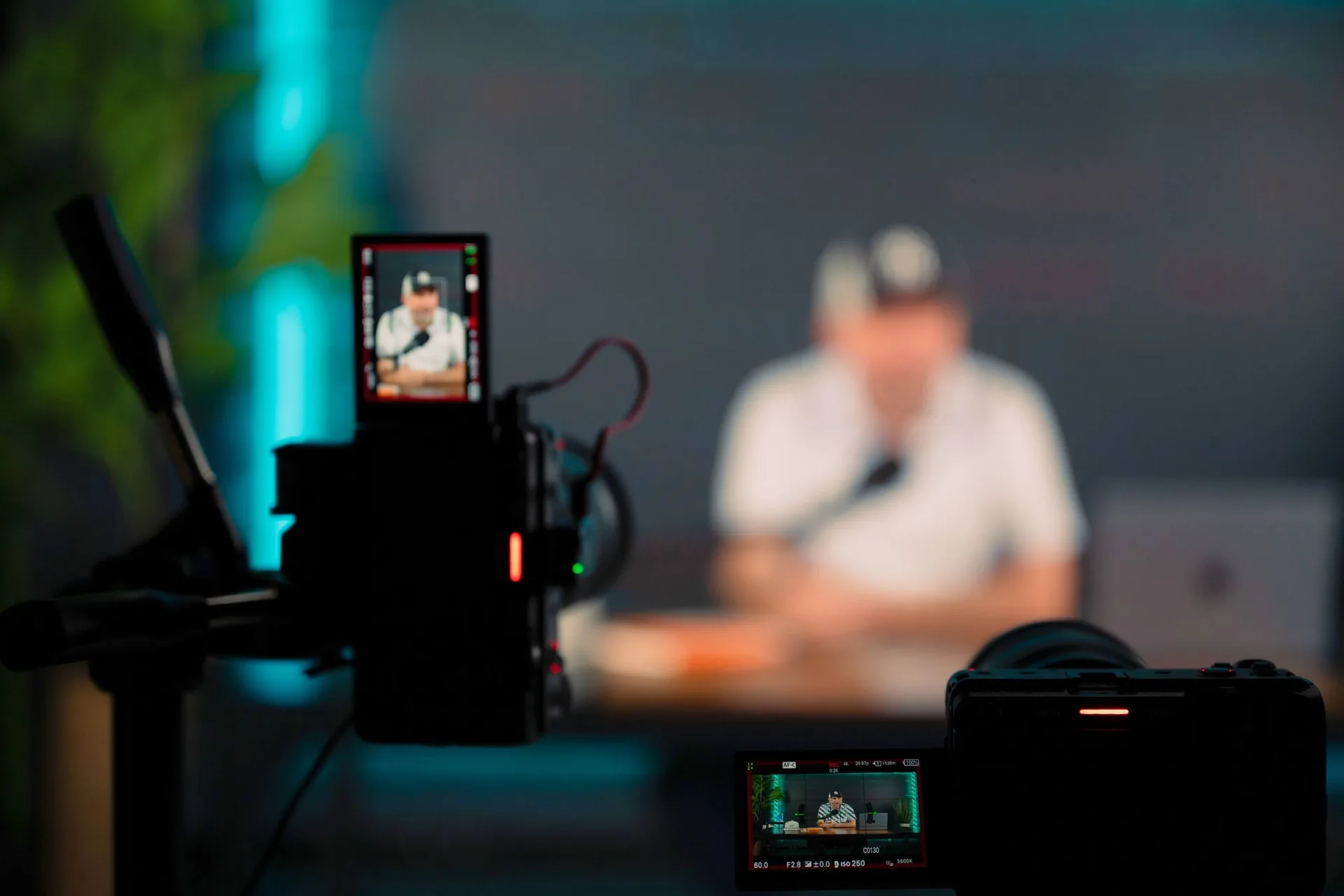
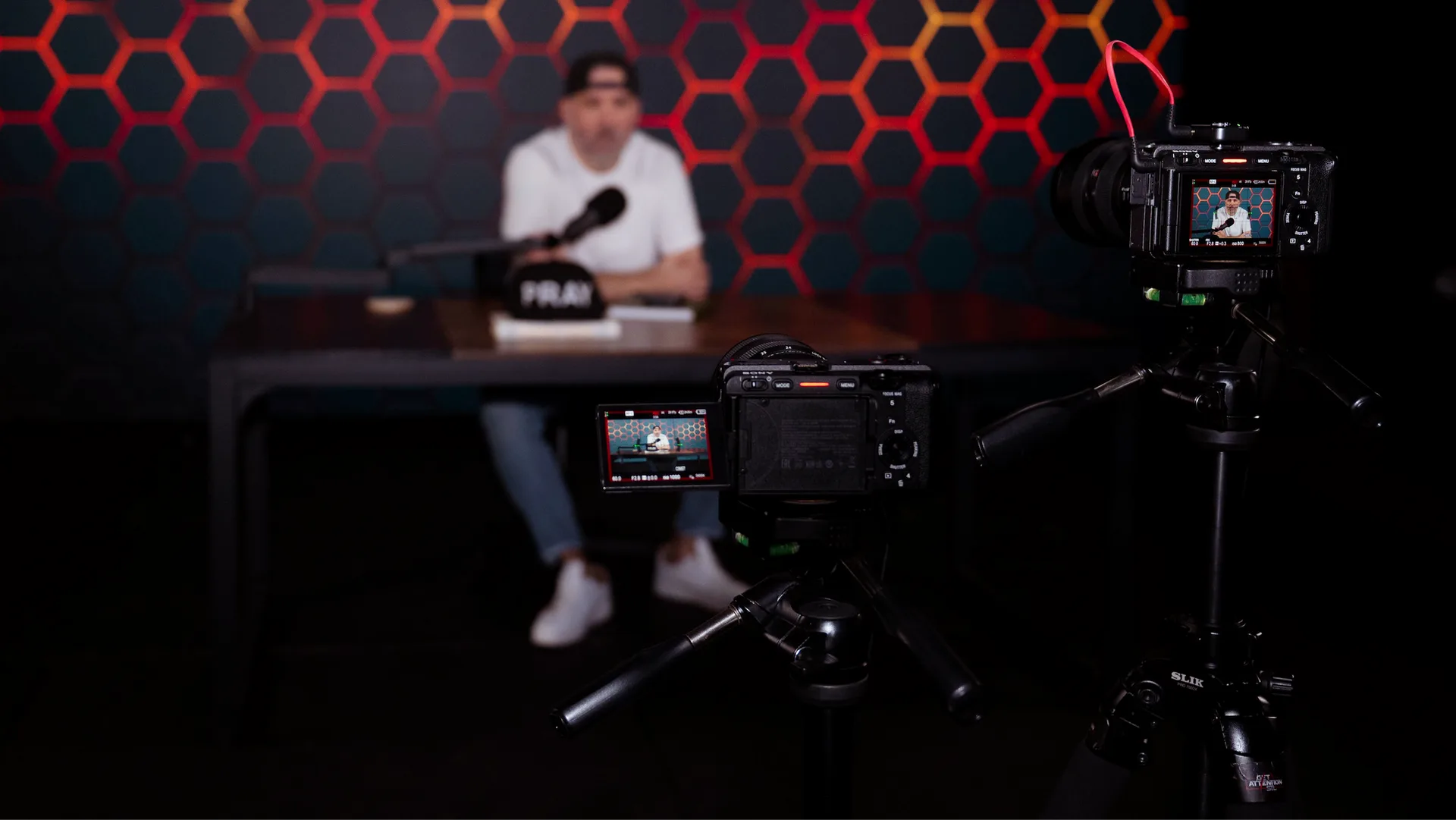
Photography or Video
Neither medium wins in the abstract, and the useful discipline is to ask which one carries the story one story at a time rather than picking a favorite format and forcing everything through it.
Video moves through time, so it is strong wherever sequence, sound, or human presence does the work. A crew framing a wall. A chef finishing a plate. An owner explaining why the shop closes on Sundays. Photography holds still, which lets a customer study something as long as they want, and it travels further, because a single frame works in an email, on a billboard, on a menu, and inside a two-inch ad tile.
A gym's video of a packed 6 a.m. class carries an energy no still frame can hold, while one photograph of chalked hands on a barbell holds something the video moves past too quickly to feel. The same choice shows up on a plate. A short video of a burger being built can create real desire, and a single photograph of that same burger, halved, steam rising, edges caught in raking light, can create more.
The Economics of Fewer, Better Images
The reasonable objection from any owner watching a budget is straightforward: why pay for photography when images are effectively free? Because cost per image is the wrong measure. The only number that matters is cost per result. Would you rather have 100 AI-generated images people ignore, or 20 original images that consistently earn attention?
Most businesses between one and twenty million dollars in revenue do not have a volume problem. They have a performance problem. They are producing more content than ever and getting less from it, then responding by producing even more.
A strong image library behaves like equipment rather than like advertising. The same twenty photographs run as paid social creative, anchor the website, carry landing pages, lift email open and click rates, fill sales collateral, populate the Google Business Profile that decides whether someone walks in, and sit inside proposals and trade show panels for years. Cost stays fixed while use compounds, which is a rare shape in a marketing budget where nearly everything else evaporates the moment the spend stops.
There is a quieter return as well. Preparing for a shoot forces a business to look honestly at itself: what the space should look like, which products deserve attention, which employees represent the brand, and what story is actually being told. Owners regularly learn more about their own positioning in one day on set than in a year of meetings.
Professional Content Should Be the Mic Drop
Phone content is genuinely valuable and should keep flowing. It is fast, current, and human, and it proves a business is alive and working. A crew photo taken on a job site at 6 a.m. does something no studio can replicate.
The mistake is letting everything live at that level. Phone content sets the rhythm. Professional content sets the standard. One keeps you present, the other decides how you are remembered.
So spend the professional work where memory matters: the homepage, the campaign, the launch, the pitch, the ad that has to stop a thumb. Casual content earns the right to be seen. Professional content earns the right to be believed.
Keep Technology in the Toolbox
Used well, AI belongs on almost every project. It is excellent for developing concepts before a shoot, building storyboards, cleaning backgrounds, generating variations and crops, and moving work through production faster. There is no honor in refusing a tool that saves a day.
The line worth holding is simple. Use technology to extend reality, not to replace it. Fabricating a dish you do not serve, a facility you do not own, or a team you have not hired is not efficiency. It is a liability with a delayed fuse, because the moment a customer discovers that one image showed something that never existed, every other image on the site loses a little credibility, including the true ones.
Attention, Trust, and Desire
Three things decide whether a business grows, and they arrive in that order. Attention gets you noticed, and in a feed where every image looks like it came from the same hand, the photograph that looks like a specific place at a specific hour is the one that interrupts the scroll. Trust gets you considered, because real rooms, real work, and real faces close the distance between what a business claims and what a customer is willing to believe. Desire gets you chosen, and desire is never created by describing a product. It arrives when someone sees an experience clearly enough to feel themselves already inside it.
Authenticity strengthens all three at once, which is why it has quietly become the most efficient investment on the marketing shelf. It is also the only advantage a competitor cannot download, subscribe to, or generate overnight, because it is built entirely from things that belong to you: your room at 7:40 in the morning, your crew, your regulars, the standard your business holds when nobody is watching.
Every business already owns the one thing that cannot be manufactured. The only real question is whether anyone has bothered to photograph it.
Because in 2026, authenticity isn't just a competitive advantage. It's the competitive advantage.
Key Takeaways
- Treat polish as the minimum standard rather than a differentiator, because an image anyone can generate no longer tells a customer anything about your business.
- Close the trust gap with evidence by photographing the space customers will walk into, the people who will serve them, and the work you actually produce.
- Judge photography by cost per result instead of cost per image, and choose twenty pictures that earn attention over a hundred that get ignored.
- Build a small original library and put it to work everywhere at once, from paid social and landing pages to email, sales collateral, and your Google Business Profile.
- Use AI to speed up production rather than to invent reality, and save professional content for the moments that decide how your business is remembered.