

The COO Who Can't Leave Well Enough Alone: Meet Chris Kelly
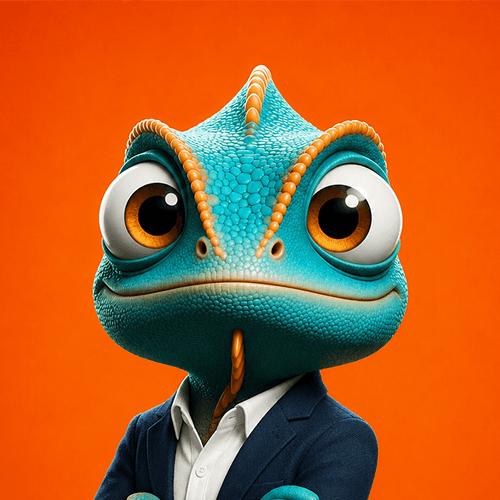
As Chief Happiness Officer, I take my responsibilities very seriously. Culture. Morale. General workplace joy. Maintaining an appropriate level of chaos. And, apparently, interviewing the humans who work here.
This time, I sat down with Chris Kelly, COO of Cracked Egg Creative, to learn more about the person responsible for making sure this increasingly ambitious operation actually...operates.
I expected to talk about leadership. Operations. Marketing. Business.
We did.
I also learned that Chris may own somewhere between 100 and 200 pairs of shoes, has very strong opinions about highlighter colors, can identify a concerning number of obscure plants, manages a fictional town to relax, and once acquired the nickname Puddles from a Little League softball team.
There is a story behind Puddles.
I was not given clearance.
So, naturally, I started digging elsewhere.
There Has to Be a Better Way
If you want to understand Chris, there's one sentence that explains quite a bit:
There has to be a better way.
She's been thinking some version of it for most of her career. Which, interestingly, was never supposed to be this career. Chris studied political science and sociology with plans to become an international corporate lawyer. Then she met a mentor through an early job who saw something in her she hadn't necessarily seen in herself yet. He challenged her. Gave her opportunities. Introduced her to a different world.
And then curiosity took over.
Chris taught herself paid advertising and social media marketing. She took Python and HTML classes because knowing that websites worked was apparently insufficient; she needed to know how they worked. She learned by doing. Asking questions. Breaking things. Figuring out why they broke. Trying again.
This pattern will become important.
Because Chris does not seem particularly comfortable knowing that something happens without understanding why it happens. Processes. Technology. Marketing. Organizations. People. Plants, apparently. She wants to know how the pieces connect. That curiosity eventually turned into a career spanning marketing, technology, operations and executive leadership across startups, agencies and major brands.
And somewhere along the way, she discovered her favorite kind of problem. Not the obvious one. The one hiding underneath it.
The Problem Underneath the Problem
Tell Chris a process isn't working and she probably isn't going to immediately fix the process.
First, there will be questions.
Is it actually the process? Is it the technology? Communication? Strategy? The people? Are we measuring the wrong thing? Did we build this for the business we were two years ago instead of the business we're becoming? Did someone purchase another piece of software because apparently twelve platforms doing the work of four wasn't exciting enough? I may be paraphrasing that last one. But not by much.
Chris believes one of the biggest mistakes businesses make is solving problems in isolation. Marketing fixes the marketing problem. Sales fixes the sales problem. Operations adds a process. Technology adds a platform. Nobody stops to look at the entire ecosystem. And suddenly three teams are tracking different versions of the same information, nobody completely trusts the reporting, broken processes have new processes built around them, and the customer journey is being held together by what Chris describes as "duct tape and good intentions."
This bothers her.
Deeply.
One of her favorite examples came from inheriting a reporting process where six people spent more than five hours every Wednesday manually building client reports from individual advertising platforms. For anyone keeping score, that's more than 30 hours of team capacity.
Every. Single. Week.
Her question wasn't, "How can we make these reports faster?"
It was:
Why are six talented people doing this in the first place?
Chris rebuilt the infrastructure using Looker Studio, Supermetrics and Funnel.io, creating standardized reporting that could be configured for each client in roughly 15 minutes. Once configured, the reporting was automated, giving clients access to their data 24/7/365 with no ongoing team involvement. The result? Clients stopped waiting for Wednesday to see what was happening. And the team got 30+ hours back every week to think, strategize, optimize and actually serve clients.
That story tells you quite a bit about how Chris views operations.
"Make it make sense. Then make it better."
Eight words.
Apparently that's Operations.
I personally would have gone with "Please stop making another spreadsheet," but this is why she is COO and I am responsible for happiness.
Operations Isn't About Keeping Everyone Organized
One thing became very clear during our conversation: Chris has some feelings about how people misunderstand operations. Operations is often treated as the department responsible for processes, project management, organization and making sure everybody does what they said they were going to do.
That's part of it.
But Chris sees operations as something much more strategic. You cannot make good operational decisions without understanding the financials, technology, people, customer experience, marketing, sales, data and where the company is trying to go.
Because every decision creates consequences somewhere else.
A more "efficient" process that creates a worse customer experience isn't efficient. Technology nobody uses isn't an improvement. Marketing that generates leads sales cannot convert isn't successful. And a COO who needs to personally make every decision? According to Chris, that COO has built a bottleneck.
Her goal is the opposite: create enough clarity, alignment, accountability and infrastructure that talented people can make great decisions without constantly waiting for permission. In fact, Chris says she knows she has done her best work when something she built continues working after she walks away from it.
Even better?
When someone else takes it and makes it better.
That might be one of the least territorial things I have ever heard an executive say.
I made a note.
Chief Happiness Officer. I notice these things.
A Strong Opinion, Loosely Held
Now, Chris has opinions.
Strong ones.
I feel confident saying this because when I asked for three words to describe her, she chose:
Loyal. Passionate. Unfiltered.
So we're not exactly breaking news here. But one of the leadership beliefs she cares about most is that changing your mind is not weakness. She believes some of the strongest words a leader can say are, "I was wrong."
You make decisions based on what you know. Then you learn something. Circumstances change. People change. Technology changes. The business changes. Your thinking should be allowed to change with it.
"Pretending none of that should affect your thinking isn't conviction," she told me. "It's ego."
That willingness to question herself is part of the same curiosity that makes Chris question everything else.
Including one sentence you should probably avoid saying in her presence:
"We've always done it this way."
Few things make her want to start investigating faster. History, she says, can explain why something exists. It does not automatically justify why it should continue existing. And "good is good enough" isn't going to get you very far either. She believes in excellence, not perfectionism. Do the work well. Make the best decision you can with the information you have. Move. Learn. Improve. Because if you wait too long, eventually your options start disappearing.
"Pay attention while you still have choices."
That one stuck with me.
So Why Cracked Egg?
This is where everything starts connecting.
Chris had reached a point in her career where she knew what kind of leader she wanted to be. She also knew what kind she never wanted to become. She had experienced extraordinary leadership and poor leadership. She had seen what transparency, trust, integrity and genuine investment in people could create and what happened when those things disappeared.
Eventually, the supposedly "safe" path started feeling riskier than jumping.
So she jumped.
Figuratively.
I am required by Legal to make that clear. Probably. And Cracked Egg became the place where a lot of the things she had learned throughout her career could finally live together.
Curiosity. High standards. Challenging conventional thinking. Building strong systems. Giving talented people room to become even better. Growing a business without losing the humans inside it. When I asked Chris what "Built Different" means to her, she didn't talk about being weird for the sake of being weird. Which was slightly disappointing coming from someone being interviewed by a chameleon. To Chris, Built Different means you don't have to fit a mold to belong.
Great teams don't need identical personalities, working styles, strengths or ways of thinking. They need shared principles: respect, honesty, integrity, accountability, high standards and a genuine commitment to the people they're building alongside.
Different people. Shared principles. And one line in her answer felt especially Cracked Egg:
People shouldn't know we're Built Different because we tell them. They should know by the way we operate and by the way we treat each other.
Okay. Serious portion complete. I have fulfilled my executive-profile responsibilities.
We now need to discuss the shoes.
There Are Somewhere Between 100 and 200 Pairs of Shoes
Chris loves beautifully crafted leather handbags. Florentine leather, specifically. She described the experience as the kind of handbag you want to stick your head inside and inhale because it smells like heirloom craftsmanship, beautiful leather, and "the brutal cost you just paid for something so small."
Then there are the shoes.
She knows there are well over 100 pairs. She suspects the actual number may be approaching 200. She refuses to count them because that would "create unnecessary accountability."
This is a COO.
Her mother has apparently suggested that Chris does not need additional shoes. Chris agrees that her mother is probably correct. This has resulted in no measurable behavioral change.
Handbags, however, have revealed Chris's true strategic genius.
If she buys one for herself and one for her mother, her mother loses the moral authority to criticize the purchase. I checked. This was not included in any of her previous operational case studies.
It should have been.
The Highlighter Situation Is Also Concerning
There are a few things you can reliably find on Chris's desk.
Sticky notes. A picture of Gus and Bailey, her dogs. And fluorescent yellow highlighters.
Please note the specificity.
Not blue. Not pink. Not pastel.
Fluorescent. Yellow.
There is no rational explanation for this preference. Other colors are simply wrong. This level of conviction also applies to Ice Breakers Sours, which must be Berry Cherry, and apparently nicknames. Most people call her Chris. "Chrissy" is family only. Unauthorized users will not receive a response. "CK" belongs to a very small group of mentors. And Puddles belongs to a group of girls Chris once coached in Little League softball.
Again, there is a story. Again, apparently none of us have the necessary security clearance.
The Woman Has Range
Chris is an introvert and a night owl. She prefers tea, dogs, the beach and a Mac.
She loves yoga, reading, traveling, gardening and cooking with what she grows. This year's vegetable garden produced enough homemade pasta sauce that she believes her freezer is now prepared for "some kind of tomato-related apocalypse."
She can identify a bizarre number of plants on sight and frequently knows whether they are poisonous to dogs, edible by humans, or useful for something incredibly specific.
She cannot necessarily tell you where she put her phone.
When she isn't solving actual business problems, she relaxes with Township and Mahjong, meaning her preferred method of decompressing from solving problems all day is apparently solving completely different problems with significantly lower stakes.
And she has recently worked her way through what I can only describe as the Big Bang Theory cinematic universe, starting with Young Sheldon, then Georgie & Mandy's First Marriage, and finally The Big Bang Theory.
Out of order. Naturally.
"If something catches my attention, I'm going down the rabbit hole," she told me. At this point in the interview, that felt less like new information and more like confirmation.
But Here's the Thing About Chris
There was another side of her that kept showing up throughout our conversation. Chris remembers things. Tiny things. Something someone mentioned wanting six months ago. A hobby they casually brought up. An obscure interest. A story they probably forgot telling her. Then one day she'll see something and immediately know: That's theirs.
She's exceptionally good at giving gifts because of it. Not necessarily expensive gifts. Specific ones. The kind that make someone ask, "How did you even think of this?"
And then there are her nieces.
To them, she is Auntie Kiss, a name born when "Auntie Chris" proved too ambitious for a two-year-old vocabulary. They are preteens now. The name stayed. When Chris talks about them, everything else falls away pretty quickly.
She talks about their curiosity. Their intelligence. Their potential. Their adventures together. Back-to-school shopping. Watching them grow from little girls who thought she hung the moon into young women becoming entirely themselves.
She doesn't take credit for who they're becoming. She just wants them to know she'll always be in their corner. And somewhere around this point, after several pages of notes about operations, leadership, plants, shoes, dogs, marketing, yellow highlighters and an unexplained person named Puddles, I realized what actually connects all of it.
She Cares
When I asked Chris what she hoped people remembered about her, she didn't give me an accomplishment. Or a title. Or a metric. She said:
"That I care."
She cares about doing things well. She cares about the people she works with and the people she loves. About keeping her word. Telling the truth. Asking the harder question. Leaving things better than she found them. Sometimes that looks like intensity. Sometimes it's asking one more question when everybody else is ready to move on. Sometimes it's challenging something that would be much easier to accept. Sometimes it's remembering a tiny thing someone told her months ago because it mattered to them. And sometimes, apparently, it means buying your mother a Florentine leather handbag so she can't criticize yours.
People are complicated.
Chris doesn't particularly care whether you remember every title she's held, every company she's worked for or everything she's accomplished. She'd rather you remember how she made you feel. That you knew she was invested. That if something, or someone, mattered to her, she showed up with her whole heart.
And for a company built around curiosity, challenging what's expected, doing things differently and leaving things better than we found them? That feels like a pretty good person to have sitting in the COO chair. Even if we're eventually going to need to discuss the shoe inventory.
I just need to figure out how to get an accurate count without creating unnecessary accountability.
— Hatch
Chief Happiness Officer
Cracked Egg Creative