
Why Most Marketing Is Forgettable (And How to Build a Brand People Actually Remember)

There has never been a better time to get your business in front of potential customers. Businesses have more marketing channels than ever before. More technology. More data. More automation. More ways to reach the right audience at exactly the right moment. Artificial intelligence can generate campaigns in minutes. Dashboards can track every click, impression, and conversion. Marketing has become faster, smarter, and more measurable than at any point in history.
So why does so much of it still feel so...forgettable?
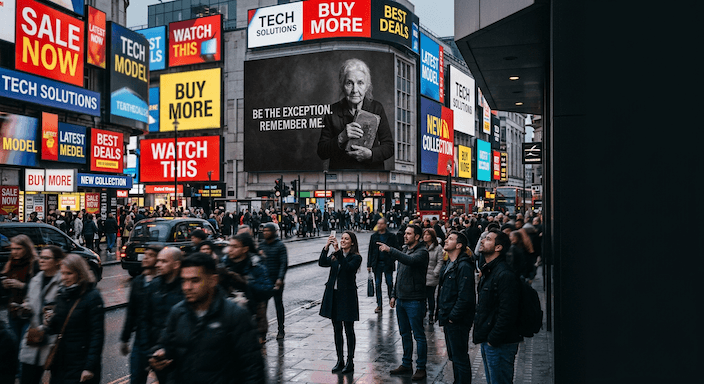
It's a question I've asked myself more and more over the years. Not because there isn't enough marketing. Because there's too much of the same marketing.
Every day we're exposed to thousands of messages competing for attention. Businesses are publishing more content, launching more campaigns, sending more emails, posting more videos, and spending more than ever trying to stand out.
Yet somehow, the more marketing we create, the less of it we actually remember. That's because most organizations are solving the wrong problem. They think they have an awareness problem. More often, they have a memorability problem. Those are not the same thing.
Awareness gets you noticed. Memorability gets you chosen. Somewhere along the way, we became so focused on getting our brands in front of people that we stopped asking whether anything we created was worth remembering.
The irony is that businesses have never had more tools capable of amplifying great ideas. At the same time, we've never been so willing to amplify ordinary ones. More reach doesn't automatically create more impact. More impressions don't automatically create more influence. More content doesn't automatically create more customers. It simply creates more noise.
The companies that consistently outperform their competitors aren't always the ones with the biggest budgets or the most sophisticated technology. More often, they're the ones that understand a simple truth.
People rarely remember the brand that talked the most. They remember the brand that gave them something worth talking about. And that's a very different way of thinking about marketing.
Somewhere Along the Way, We Started Measuring the Wrong Things
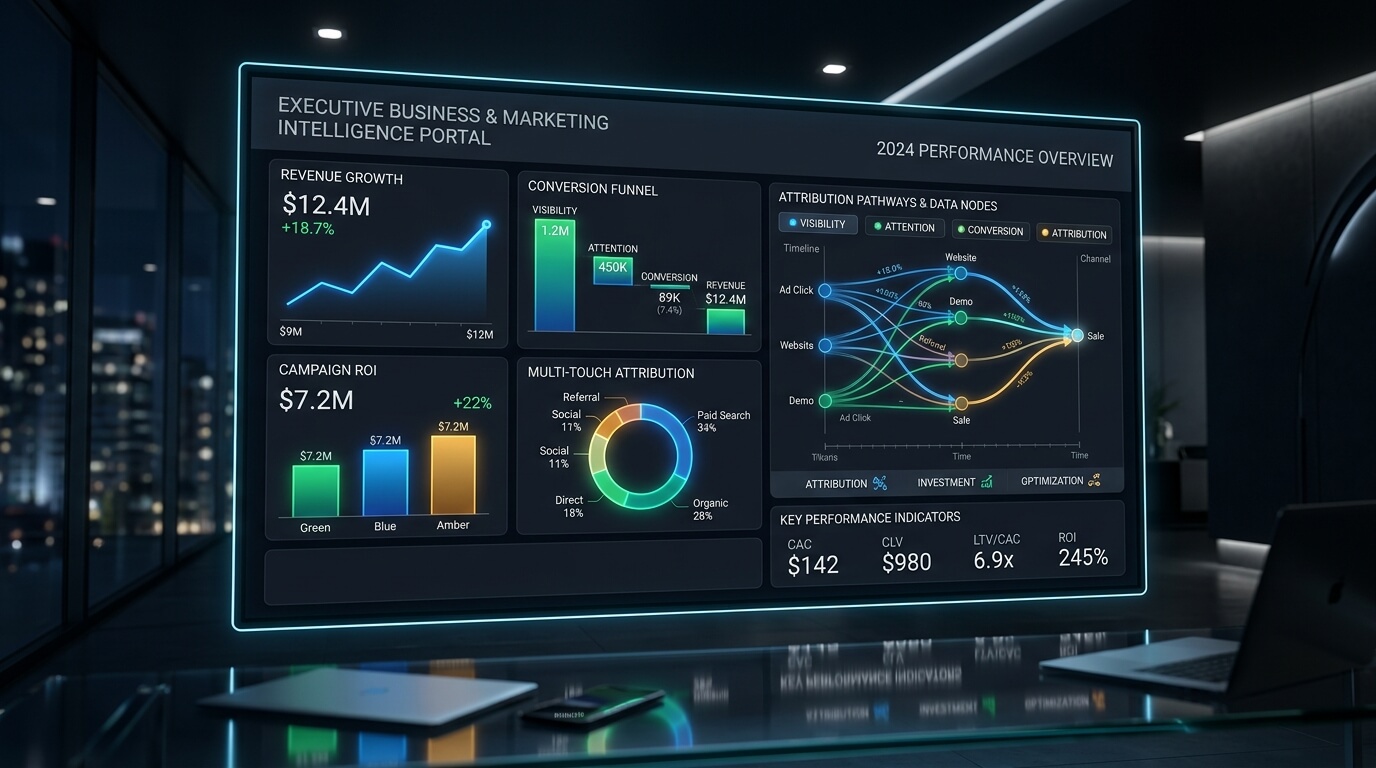
Somewhere along the way, businesses became convinced that doing more was the same as accomplishing more. Marketing departments started measuring activity instead of impact. Leadership teams celebrated output instead of outcomes. Dashboards became more important than differentiation. And before anyone realized it, being busy had quietly replaced being memorable.
Measurement isn't the problem. Today's marketers have access to more data than any generation before them. We can see where people came from, what they clicked, how long they stayed, where they dropped off, and whether they eventually became customers. Those insights are valuable.
The problem isn't that we're measuring. The problem is what we've chosen to measure. When every conversation begins with impressions, clicks, engagement rates, cost per acquisition, or return on ad spend, it's easy to believe those numbers tell the whole story. They don't. They're indicators. Not outcomes.
A campaign can generate millions of impressions and leave almost none of them behind. A website can have an exceptional conversion rate while giving visitors nothing they'll remember a week later. A social post can accumulate thousands of likes before disappearing into the endless stream of content that replaces it by tomorrow morning.
Marketing has become remarkably good at measuring attention.
It's much less effective at measuring significance.
And significance is what drives long-term growth.
I've sat in more executive reviews than I can count, surrounded by incredibly intelligent leaders making thoughtful, data-driven decisions. No one walked into those meetings with the wrong intentions. The goal was always the same: improve performance, increase efficiency, generate better business results. But somewhere in those conversations, something shifted. The discussion gradually moved away from the idea itself and toward the metrics surrounding it.
- How many impressions did it generate?
- What was the click-through rate?
- Did engagement improve?
- How many conversions came from the campaign?
Those are important questions. They're just not the first questions. Because before we ask how well something performed...we should probably ask whether it was worth remembering in the first place.
Vanity metrics have probably killed more marketing budgets than bad creative ever has.
Not because the numbers were inaccurate. Because they convinced organizations they were succeeding when all they were really doing was generating activity. There's a profound difference between getting someone's attention and earning a place in their memory. One is rented. The other becomes part of how people make future decisions. The companies that consistently outperform over the long term understand that distinction. They don't ignore data. They simply refuse to confuse measurable activity with meaningful impact. Because growth rarely comes from doing more. It comes from creating something people can't stop thinking about.
Visibility Isn't the Same As Memorability
One of the biggest misconceptions in modern marketing is that attention and memorability are interchangeable. They're not. Attention is simply the opportunity to be seen. Memorability is the reason someone thinks about you after you've disappeared. The two often happen together, but they are not the same thing. That's important because most marketing strategies are built around winning attention. More impressions. More reach. More clicks. More frequency. More visibility. None of those things are bad. But they're only valuable if they lead to something that lasts.
The brands we remember aren't necessarily the brands we encountered most often. They're the brands that challenged our assumptions, introduced a fresh perspective, or made us look at a familiar problem differently. They gave us an idea worth carrying forward.
Attention can be purchased. Memory has to be earned.
Our brains filter thousands of messages every day. It doesn't remember the loudest message; it remembers the most meaningful one. A campaign can generate millions of impressions and still leave almost no lasting impression. Because visibility measures exposure. Memorability measures significance. And those are two very different outcomes.
People don't remember every advertisement they see. They remember the ones that challenged an assumption. Made them laugh. Made them feel something. Or gave them a story worth retelling. The campaign ends. The media budget runs out. The impressions stop. The memory doesn't. That changes the conversation. Rather than asking "How many people saw this?"
, leaders should begin asking, "What will people remember?"
Because people rarely remember the brand that talked the most. They remember the brand that gave them something worth talking about.
Memorable Brands Don't Fight for Attention. They Change the Conversation.
Study the brands people remember most, and you'll notice something interesting. Very few became memorable because they outspent everyone else. Very few earned loyalty simply because they advertised more frequently. And almost none became iconic by saying the exact same things their competitors were already saying.
Instead, they offered people a different way to think. Sometimes it was a new way to think about a product. Sometimes it was a new way to think about an industry. Sometimes it was a new way to think about themselves. Whatever the approach, the pattern remains consistent. The brands we remember rarely compete on volume. They compete on perspective. That's important because perspective is infinitely harder to copy than a product feature, a pricing strategy, or an advertising campaign.
Competitors can replicate your offer. They can imitate your design. They can even mimic your messaging. What they can't duplicate is the unique way you see the world and the conviction with which you communicate it. This is where many organizations unintentionally limit themselves. Trying to appeal to everyone, they smooth off the very edges that make them interesting. Ideas are rewritten until everyone agrees with them. Headlines become safer. Campaigns become more predictable. Messaging becomes more familiar. Every revision makes the work less likely to offend and less likely to be remembered. The irony is that it happens with the best intentions. Leadership teams want to reduce risk. Marketing teams want to broaden appeal. Creative teams want approval. Individually, each decision feels reasonable. Collectively, those decisions create something far more dangerous: work that no one dislikes because no one feels anything about it.
I've sat in enough conference rooms to know this isn't bad people making bad decisions. It's usually the result of smart people making cautious ones. Unfortunately, markets don't reward caution nearly as often as they reward clarity.
People don't remember the brands that tried to sound like everyone else.
They remember the brands with the courage to sound unmistakably like themselves.
That doesn't mean being louder. It doesn't mean being controversial for the sake of attention. And it certainly doesn't mean manufacturing a personality that isn't authentic. It means having a point of view strong enough that people recognize it before they recognize your logo. Because the most memorable brands aren't remembered for everything they say. They're remembered for what they consistently stand for. Consistency of perspective has always been more powerful than consistency of promotion.
Start Asking Better Questions
One of the easiest ways to understand what an organization values is to listen to the questions its leaders ask. Questions shape conversations. Conversations shape priorities. Priorities shape decisions. And over time, those decisions shape culture.
Marketing is no different. If every campaign review begins with impressions, clicks, website traffic, and cost per lead, those metrics inevitably become the destination rather than the indicators. Teams become exceptionally good at improving the numbers they're asked to report because that's how success is defined. There's nothing wrong with those measurements as they're essential for understanding performance. The problem begins when they're mistaken for the purpose of the work.
The most revealing moments in executive meetings aren't the answers people give. They're the questions nobody asks. Almost no one asks whether the campaign changed how customers think. Almost no one asks whether the message gave people a reason to talk about the brand after they left the website. Almost no one asks whether the creative introduced an idea that competitors would struggle to imitate. Those questions are harder to answer. They're also the questions that determine whether marketing creates momentum or merely generates activity.
Imagine if every campaign review started with a single question: "What will people remember?"
Not what they'll click. Not what they'll download. Not what they'll buy today. "What will they remember next week?"
What idea will still be with them after the meeting ends, after the email is deleted, after the advertisement disappears from their screen?
The answer to that question has a way of changing all the others. Suddenly, creativity is no longer viewed as decoration. It's recognized as a strategic advantage. Messaging becomes less about filling space and more about shaping perception. Brand isn't treated as something separate from performance marketing; it becomes the force that gives performance marketing something worth amplifying. That's when organizations make different decisions.
They stop asking, "How do we create more content?"
They begin asking, "Do we have something worth saying?"
They stop asking, "How do we look like the market leader?"
They begin asking, "How do we become impossible to confuse with everyone else?"
Those are very different conversations. In my experience, different conversations lead to different outcomes.
Because the quality of your marketing will never consistently exceed
the quality of the questions your organization is willing to ask.
What Changed My Mind
If these ideas sound deeply held, it's because they are. They weren't formed in a conference room over the course of a single meeting. They were shaped by years of watching remarkably smart people wrestle with the same question: How far is too far?
One of those moments happened during an executive review. We'd already spent more than a year refining the customer experience on the company's website through continuous testing. The website was already producing strong results. During one review, someone proposed additional product filters. The concern was that showing fewer products might unintentionally cause customers to leave.
Instead of debating assumptions, we tested them. Sixty days later, customer abandonment had declined, sales had increased, and heatmaps confirmed customers were finding what they needed more quickly. What stayed with me wasn't the outcome. It was how the decision was made.
Years later, I sat in a creative review as a campaign for a major event was being finalized. Everyone agreed the concept was strong. The discussion wasn't about whether the strategy worked. It was about whether the execution pushed too hard. Would Legal approve the language? Was the music too intense? Did the pacing feel too aggressive?

Even though audience disclosures were already built into the campaign, the instinct was to soften the very elements that made the idea memorable. I couldn't shake one thought. Every revision made the campaign safer. Every revision also made it less likely anyone would remember it. The tension everyone was trying to remove was the very thing that gave the campaign its power.
Then I experienced the opposite. In another campaign discussion, the creative directly challenged a competitor. The messaging wasn't subtle. It was designed to start conversations. As the room debated toning it down, leadership asked a question I'll never forget. "Why stop now?"
Not because they wanted controversy. Because they wanted conviction. They understood something many organizations never do.
People rarely talk about marketing that tries to please everyone.
They talk about marketing that has the courage to stand for something.
The campaign moved forward. It exceeded expectations. Not because it reached more people. Because more people remembered it.
Looking back, it wasn't any single meeting that shaped my thinking. It was the accumulation of moments like these throughout my career, repeated across organizations, industries, and leadership teams.
The Ads I Never Deleted
I've spent more than two decades surrounded by advertising.
I've reviewed campaigns, launched campaigns, measured campaigns, celebrated wins, learned from failures, and watched brands compete for attention. I've probably seen hundreds of thousands of advertisements throughout my career. Maybe more.
There are only two I've kept.
One is Samsung's Ostrich (2017). No dialogue. Just an impossible story, an unforgettable soundtrack, and a reminder that limitations are often nothing more than beliefs waiting to be challenged.
The other is Volkswagen's The Force (2012). A young boy dressed as Darth Vader stands in the driveway trying to use the Force to start his father's car. Inside the house, his father quietly presses the remote start button. It's funny. It's charming. It's brilliantly simple.
Years later, I still remember every frame. Out of hundreds of thousands of advertisements... Those are the two I saved. Not because they interrupted my day. Because they stayed with me long after the day was over.
And that's the difference. We don't save advertisements. We save ideas.
Let's Call It What It Is.
It's easy to blame marketing when growth slows down. The campaigns aren't generating enough leads. The website isn't converting well enough. Social media isn't producing engagement. The advertising isn't delivering the return everyone expected.
Sometimes those things are true.
After spending more than twenty years working alongside executive teams, I've learned that marketing is often a reflection of something much deeper. It reflects what leadership values. Organizations that value activity tend to produce more activity. Organizations that value efficiency become exceptionally efficient. Organizations that value short-term metrics become exceptionally good at improving them.
Organizations that value memorable ideas eventually build brands that people remember.
Marketing rarely operates in isolation. It mirrors the conversations taking place around conference tables, the questions leaders ask in quarterly reviews, the behaviors that get rewarded, and the standards accepted as "good enough."
That's why memorable marketing isn't created by accident.
It's created by culture.
It's created when leaders decide that being noticed isn't enough. That being different matters more than being familiar. That having a point of view is more valuable than trying to appeal to everyone. That creativity isn't an expense to be managed but an investment in how the business will be remembered. Those aren't marketing decisions. They're leadership decisions.
The next time your team gathers to review a campaign, resist the temptation to begin with the dashboard. Start somewhere much simpler.
Ask the one question that quietly determines every other answer. "What will people remember?"
Because that single question has a way of changing everything that follows. It changes the conversations. It changes the priorities. It changes the work. And over time, it changes the business. There has never been a shortage of companies competing for attention. There has always been a shortage of companies worth remembering. The difference has never been who could spend the most. It's who had something meaningful to say, and the courage to say it in a way no one else could.
Because visibility is rented. Memory is owned.