Ads Are Here in ChatGPT. Here’s What Businesses Need to Know.

For more than 20 years, digital marketing has revolved around two things.
What people search for.
And what gets their attention.
Google built an advertising empire around the first.
Meta built one around the second.
Now ChatGPT is introducing something different.
Advertising around what people are actually trying to decide.
That distinction matters more than most businesses realize.
Because ChatGPT ads aren't just another placement to throw into your media plan. They may be an early look at the next major shift in how customers discover businesses, research products and make buying decisions.
And if you're waiting until this becomes a mature advertising channel before paying attention, I think you're making a mistake.
Not because you should dump your Google Ads budget into ChatGPT tomorrow. You shouldn't.
But because the behavior underneath this change is already happening.
The ad is new. The customer behavior isn't.
ChatGPT Ads Are Here
OpenAI began testing ads in ChatGPT in the United States in February 2026 and has continued developing the platform since.
Ads can appear to users on Free and Go plans, while Plus, Pro, Business, Enterprise and Edu accounts remain ad-free. They appear below ChatGPT responses and are clearly separated from the answer. Source: OpenAI, Ads in ChatGPT
That's important.
Advertisers cannot simply write a bigger check and buy their way into ChatGPT telling you their company is the best. OpenAI says advertising and ChatGPT's answers are separate. Advertisers cannot pay to shape, rank or alter the response.
But advertisers can pay to appear alongside conversations where their products or services may be relevant.
And that's where this gets interesting.
OpenAI says its advertising system can consider the context and intent of the current conversation when determining which ads may be relevant. Source: OpenAI, Ads in ChatGPT: The Basics
Not just a keyword.
The context and intent behind the conversation.
That's a very different advertising product.
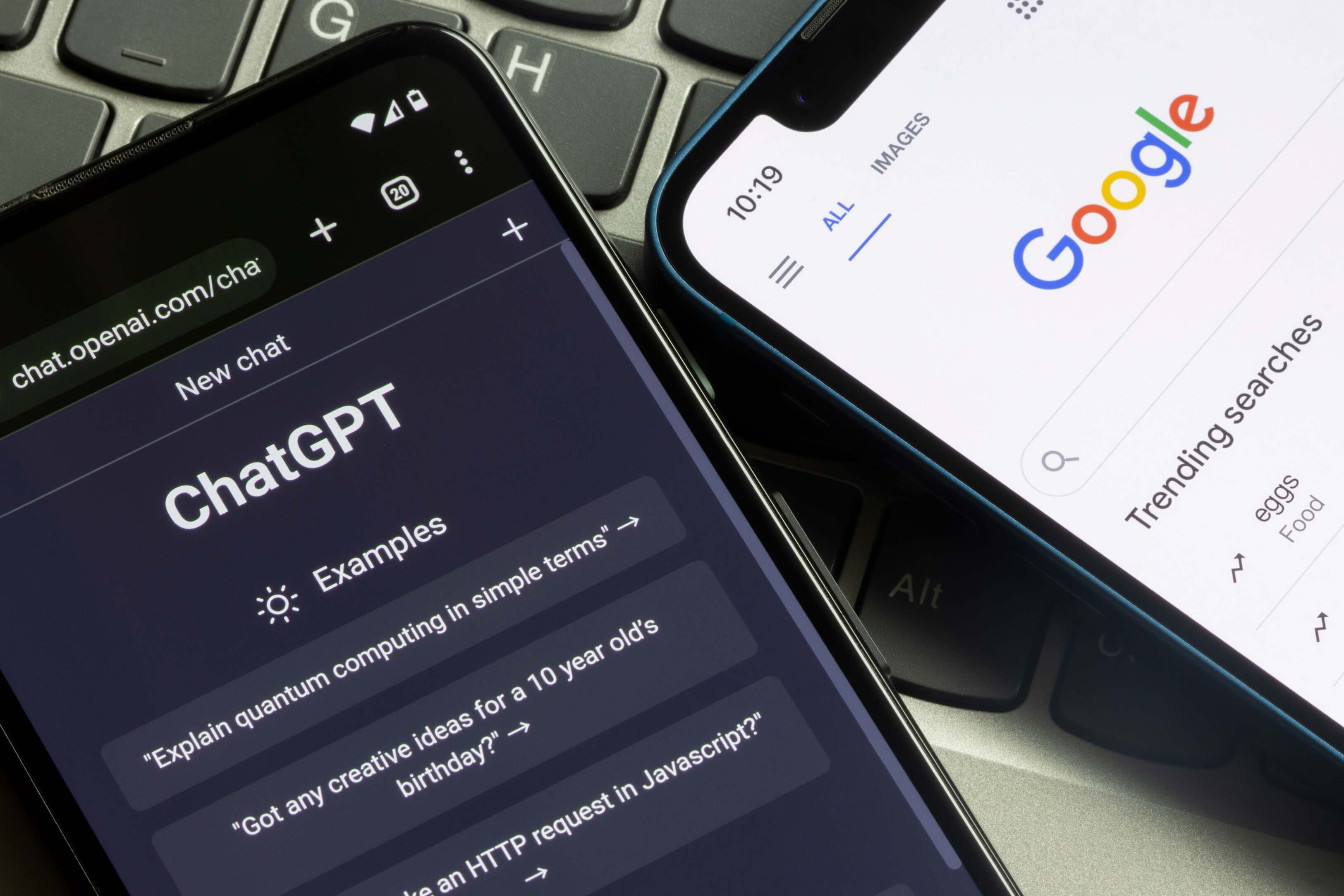
Google Knows What You Searched. ChatGPT May Understand Why.
Imagine somebody goes to Google and searches:
Best CRM for small business.
There's obvious commercial intent. Companies have spent billions of dollars competing for searches exactly like it.
Now imagine the same buyer goes to ChatGPT and says:
"I own a 40-person service company. We're using spreadsheets to track leads. My salespeople hate our current system. I need something under $2,000 a month that works with QuickBooks, doesn't require a full-time administrator and won't take six months to implement. What should I look at?"
Those two people may ultimately buy the exact same product.
But look at what exists around the second interaction.
Company size. Budget. Current pain. Existing technology. Implementation concerns. Buying criteria. Objections.
Intent.
Google got the query.
ChatGPT got the story behind the query.
That's why I don't think it's useful to think of ChatGPT advertising as simply another version of Google Ads.
Google monetized the search box.
Meta monetized the feed.
Conversational AI could monetize the decision.
That's not another ad placement. That's another battlefield.
The Buying Journey Is Already Moving
It's easy to dismiss this as some hypothetical future where robots buy everything for us.
We don't need to go that far.
People are already using AI to help make buying decisions.
Gartner surveyed U.S. consumers in January 2026 and found only 11% were willing to let AI make purchase decisions for them, even in the categories where consumers were most receptive.
But substantially more were willing to let AI help narrow their choices: 31% for household supplies and 28% for personal electronics. Source: Gartner, Consumers Want AI Shopping Help, But Not AI Purchase Decisions
That's the distinction businesses should pay attention to.
Consumers don't necessarily want AI pulling out the credit card.
They want AI helping them decide which card should eventually get charged.
And that puts AI directly in the consideration phase of the customer journey.
Think about your customers. Before calling, filling out a form or walking into your business, how much research happens? How many competitors do they compare? How many questions need answers?
AI can compress that process into a conversation.
By the time that conversation turns commercial, the customer may already be much further down the buying funnel.
The click may happen later because the research happened before it.
If you're only measuring the click, you're already missing part of the sale.
Here's Where Businesses Are Going to Screw This Up
I've been in marketing long enough to know what happens next.
A new channel emerges. Everyone gets excited. Someone declares the old channel dead. Budgets get shifted. Agencies suddenly become experts in something that didn't exist six months ago.
And businesses chase the shiny object.
Don't.
Google Ads isn't dead. SEO isn't dead. Meta isn't dead.
Your website sure as hell isn't dead.
AI doesn't make marketing fundamentals less important. It exposes the businesses that never had them.
OpenAI says its advertising system can consider the context of the conversation, landing page, title, copy and advertiser-provided context hints when determining relevance.
So your positioning matters. Your website matters. Your content matters. Your offer matters.
A new advertising platform doesn't fix a bad offer.
AI doesn't fix a confusing website.
You can't automate your way out of being forgettable.
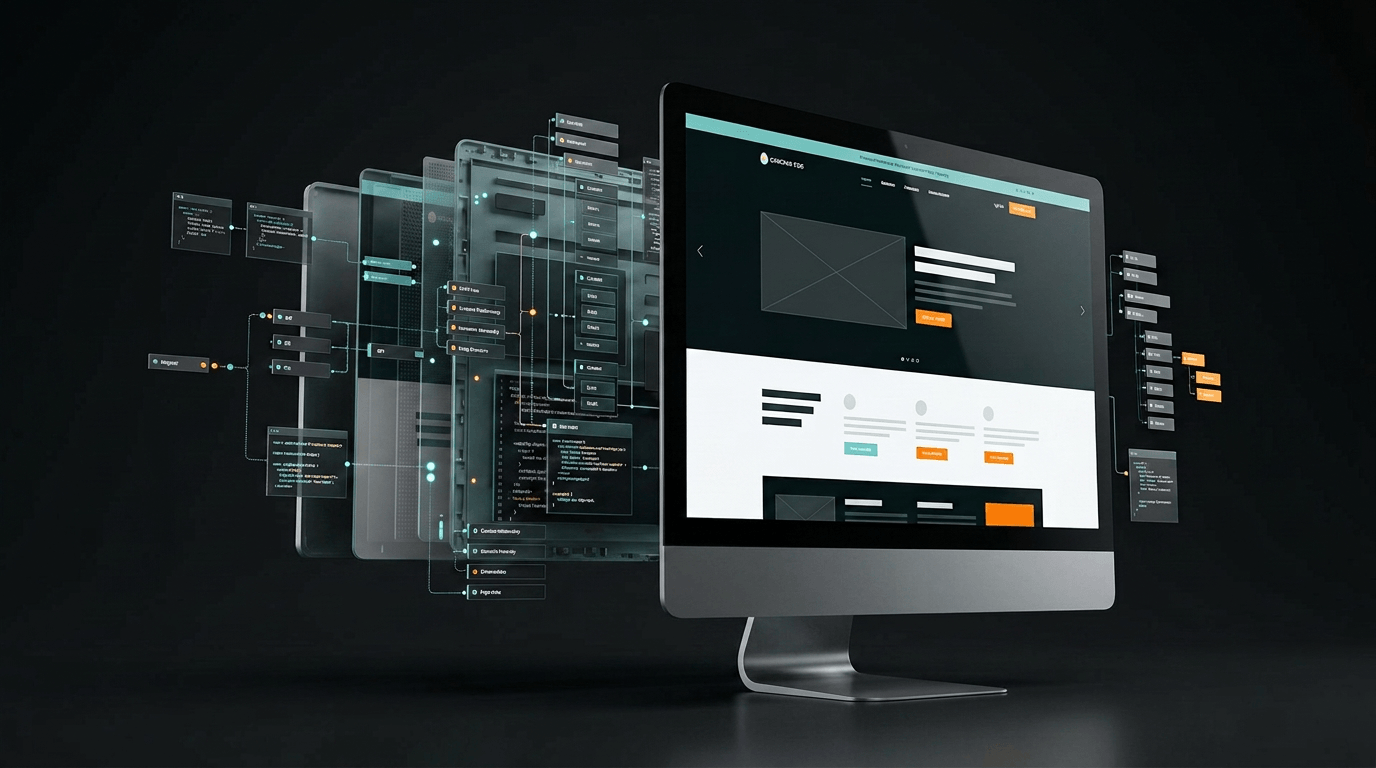
Your Website May Be More Important in an AI World, Not Less
For years I've heard predictions that websites were becoming less important.
Social media was going to replace them. Apps were going to replace them. Google Business Profiles were going to replace them.
Now AI is supposedly going to replace them.
I don't buy it.
The website is changing roles. It's no longer just a destination.
It's information infrastructure.
AI systems need to understand what your company does. Customers need somewhere to validate what they've learned. Advertising systems need landing pages that match the problems being discussed.
That means making your business painfully easy to understand.
What do you do? Who do you serve? Where do you operate? What makes you different? What does it cost? What problems do you solve? What proof do you have?
If your website can't answer those questions clearly, don't expect AI to magically figure them out.
And here's the uncomfortable part:
If AI can't figure out why somebody should choose you, there's a decent chance your customers can't either.
That's not an AI problem.
That's a marketing problem.
This Is Bigger Than ChatGPT Ads
The ad itself isn't the biggest story.
The change in customer behavior is.
ChatGPT Ads could become enormous. The economics, targeting and formats will change.
But customers have already discovered they can ask AI to help organize a buying decision.
That's the shift.
For years marketers asked:
Where do we rank?
Then social media made us ask:
How much attention are we getting?
Now businesses need to ask:
Does AI understand enough about our company to include us in the conversation?
Because your next competitor may not beat you by ranking one position higher on Google.
They may win before the customer ever gets to Google.
Paid and Organic Are About to Collide
ChatGPT responses and ChatGPT ads are separate. Advertisers don't buy the answer.
But think about the customer experience.
Someone asks a question. AI helps them understand the problem, explains potential solutions and may surface companies or sources organically. Then a relevant sponsored placement can appear below that conversation.
Organic discovery and paid media now exist inside the same decision environment.
Eventually, businesses may need to think about AI visibility the way sophisticated marketers think about Google.
You don't choose between SEO and paid search. You understand how they work together.
The same thing could happen here.
There will be an organic AI visibility strategy.
There will be a paid AI strategy.
The strongest companies will understand both.
You can buy the ad.
You cannot buy your way into being the answer.
That has to be earned.
So How Do You Actually Advertise on ChatGPT?
Let's get practical.
OpenAI has a self-service Ads Manager in beta that lets advertisers create campaigns, organize ad groups, build ads, establish budgets and bids, and measure performance. Source: OpenAI, ChatGPT Ads advertiser documentation
If you've run Google Ads or Meta campaigns, the structure will feel familiar.
But don't assume the strategy should be the same. OpenAI itself says creating ads for ChatGPT requires a different approach from keyword-based platforms. Source: OpenAI, Create ads for ChatGPT
ChatGPT isn't Google with a chatbot bolted onto it.
The opportunity is the conversation happening before the ad appears.
1. Decide What You're Actually Trying to Accomplish
OpenAI currently supports CPM, CPC and conversion-optimized CPC campaign objectives. Source: OpenAI, Create campaigns for ChatGPT
CPM is built around reach. CPC around traffic. Conversion-optimized CPC focuses on downstream actions.
If I'm a local service business testing this, I want an action I can measure.
Did someone become a qualified lead? Schedule an appointment? Buy something?
The technology may be new. The requirement to produce a business result isn't.
A bad campaign with artificial intelligence is still a bad campaign.
2. Start Smaller Than Your Ego Wants You To
Do not move half your Google Ads budget because somebody on LinkedIn told you AI is the future.
Build a test.
Pick a market. Pick an offer. Pick an objective. Determine what success looks like before spending the first dollar.
Then learn.
Early adoption without measurement isn't innovation.
It's gambling with better vocabulary.
3. Stop Thinking Only in Keywords
Google Ads trained us to think in keywords: "Emergency plumber." "Divorce attorney near me." "Best CRM for small business."
ChatGPT introduces context hints, natural-language descriptions that help OpenAI understand the conversations and situations where an offering may be useful. Source: OpenAI, Write context hints for ChatGPT Ads
These aren't exact-match keywords.
Instead of asking:
What would my customer search?
Ask:
What would my customer be talking about when they need me?
Take a roofing company. Don't only think "roof replacement." Think: "My roof is 20 years old." "We had hail last night." "I found water in the attic." "Should I file an insurance claim?"
You're moving from keywords toward problems, situations and intent.
Google taught marketers to bid on words.
AI may force marketers to understand the customer again.
Imagine that.
4. Build Ads Around Problems, Not Slogans
OpenAI recommends clear, specific, benefit-focused messaging and distinct creative variations. Source: OpenAI, Create ads for ChatGPT
Good.
Someone having a detailed conversation about a real problem doesn't need:
WE'RE THE #1 ROOFER IN TOWN!!!
Or:
YOUR TRUSTED PARTNER FOR ALL YOUR NEEDS.
That says absolutely nothing.
If the conversation is about hail damage, talk about hail damage. If it's financing, talk about financing. If it's commercial roofing, don't show an ad written for homeowners.
The closer the advertising gets to the actual problem, the more useful it becomes.
AI isn't killing good marketing.
It may finally punish lazy marketing.
5. Don't Send Everyone to Your Homepage
This is where businesses burn money on every advertising platform.
They create a specific ad and send everybody to the homepage.
Why?
If your ad is about commercial roofing in St. Louis, send people to a page about commercial roofing in St. Louis.
Match the landing page to the problem. Match the message, offer and geography. Make the next action obvious.
OpenAI says the landing page can be considered when determining ad relevance.
Don't pay for relevance and then destroy it with the click.
6. Set Up Conversion Tracking Before You Spend Money
OpenAI supports conversion measurement, and tracking is required for its conversion-optimized campaign objective.
Set it up before launch.
Not two months later when somebody asks: "Is this actually working?"
Clicks aren't revenue. Impressions aren't revenue. Traffic isn't revenue. A dashboard full of green arrows isn't revenue.
Marketing that can't be measured eventually becomes marketing that can't be defended.
7. Test ChatGPT Against the Rest of Your Marketing
Don't put ChatGPT Ads in a reporting box by itself.
What's the cost per qualified lead? Conversion rate? Close rate? Customer acquisition cost? What happens to branded search and direct traffic?
And don't assume the ChatGPT dashboard tells the entire story.
It won't. Neither does Google. Neither does Meta.
A customer might discover you in ChatGPT, Google you tomorrow, visit your website three times, see a retargeting ad and call next week.
Your dashboards will fight over who gets the trophy.
Your customer already made the decision.
Your job is to understand what moved them.
And Then There's Attribution
Imagine this journey.
Someone spends 15 minutes researching a problem in ChatGPT. They encounter your company but don't click.
Two days later they Google you.
A week later they return directly and fill out a form.
What generated the customer?
Google might get the credit. Direct might get the credit. ChatGPT may get nothing. Your salesperson might enter "internet" into the CRM and destroy whatever useful information was left.
Welcome to modern marketing attribution.
The channel that creates demand may not be the channel that captures it.
If you're measuring every channel in isolation, you're going to make expensive decisions based on incomplete information.
The spreadsheet can be perfectly accurate and the conclusion can still be completely wrong.
Should My Business Advertise on ChatGPT Now?
Maybe.
That's the answer nobody trying to sell you ChatGPT Ads wants to give you.
If your customers use ChatGPT during research and consideration, your business is eligible, your landing pages and measurement work, and you have enough budget to run a meaningful test, I'd seriously consider it.
But don't advertise there because it's new.
Set a hypothesis. Establish the metric. Run the test. Compare the economics.
Then decide.
Being early can create an advantage.
Being early and stupid just means you lose money before everybody else does.
The Opportunity Isn't "Buy ChatGPT Ads"
I want to make one thing clear.
The takeaway shouldn't be:
Nick says everybody needs to advertise on ChatGPT.
I don't.
It's early. Capabilities, competition and performance will change. Some businesses may crush it. Others may discover their customers aren't there yet.
That's exactly why it's worth testing.
Form a hypothesis. Build the campaign correctly. Measure the result. Learn. Adjust.
Then decide whether the numbers justify another dollar.
New platform. Same accountability.
If the math doesn't work, I don't care how exciting the technology is.
The Next Marketing Battleground
For twenty years, marketers fought to rank for keywords.
Then we fought to win attention in feeds.
Now we're entering a third fight.
Being part of the answer when someone is making a decision.
ChatGPT ads are one piece of that shift.
But don't confuse the ad product with the revolution underneath it.
Consumers now have an intelligent layer sitting between their problem and your business.
That layer can research. Compare. Filter. Explain. Recommend.
And now it can advertise.
So no, I'm not telling you to shut off Google Ads tomorrow and move the money to ChatGPT.
I'm telling you something more important.
For decades, marketers worked to make sure customers could find their businesses.
Now we also have to make sure machines can understand them.
Because the next customer may never type your favorite keyword.
They may simply explain what they need and ask:
"Who should I hire?"
And when that happens, your business is either part of the conversation or it isn't.
Start preparing your business for a world where the customer doesn't search for you.
They ask for you.
Because by the time everyone agrees this shift is real, the businesses that moved early won't be figuring out how to start.
They'll be figuring out how much further ahead they can get.